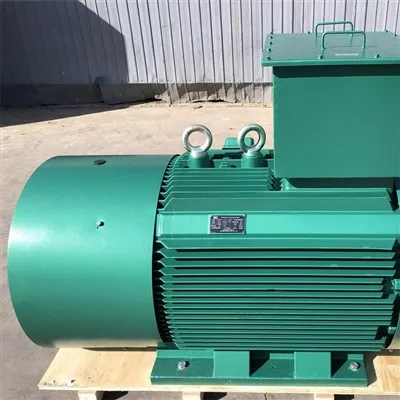
The rare earth permanent magnet motor materials has the key advantage of high magnetic energy density, which enables it to output strong power with small size and low energy consumption.
1. Core performance: Excellent magnetic energy and efficiency, meeting high demand operating conditions
The strong magnetic properties directly determine the core performance of the motor:
High magnetic energy density brings stronger power output. The magnetic energy product (an indicator of a magnet's ability to store magnetic energy) is the highest among existing permanent magnet materials (reaching 30-55 MGOe), far exceeding ferrite. This enables the motor to output greater torque at the same volume or achieve smaller volume at the same power. The use of neodymium iron boron material permanent magnet motor can reduce the volume by more than 30% and improve the power response speed. The wide and efficient range brings lower energy consumption, higher speed, and more precise control, making it suitable for precision applications. This motor has excellent magnetic field stability. Combined with the frequency converter control system, its speed regulation range is wide, from tens of revolutions per minute to tens of thousands of revolutions per minute, and the speed fluctuation is extremely small (error ≤ 0.5%). This meets the requirements of industrial servo motors (such as machine tool spindles and robot joints) for "precise positioning" and "fast start stop".

2. Main features: Structure and adaptability to multiple scenarios
From the perspective of users and enterprises, the advantages of neodymium iron boron motors are ultimately reflected in their "economic benefits" and "application scalability": low long-term operating costs and high cost-effectiveness. Although the initial purchase cost is 30% -50% higher than that of ferrite motors, due to its high efficiency and low energy consumption, the cost can usually be recovered within 1-2 years by saving electricity bills; The maintenance cycle is as long as 5-8 years, which reduces maintenance costs by more than 50% compared to induction motors.
In the auxiliary drive of heavy equipment such as mining crushers and metallurgical rolling mills, permanent magnet motors have three key characteristics: high starting torque, strong resistance to load fluctuations, and high energy efficiency.
1) Accurately solving the core pain points of auxiliary driving for heavy equipment: mining crushers need to crush high hardness ores (such as granite and iron ore), and metallurgical rolling mills need to roll high-temperature steel billets. Auxiliary drives, such as the feeding conveyor drive of crushers and the roller conveyor drive of rolling mills, face two major challenges, and pm motors can directly solve these problems:
Addressing the pain point of "difficulty in starting with heavy loads": When auxiliary driving is used to start heavy equipment, it is often necessary to drive "full load materials" (such as crusher conveyor belt loaded with ore, rolling mill roller conveyor loaded with high-temperature steel billets), and the starting resistance far exceeds the rated load. The starting torque of traditional induction motors is only 1.5 to 2 times the rated torque, which is prone to "starting lag" or even "starting failure".The starting torque of a permanent magnet motor can reach three times the rated torque, making it easy to drive heavy-duty starting without the need for auxiliary devices. For example, the feeding conveyor belt of a 1000 ton/hour crusher in a certain mine is equipped with a 55 kW pm motor. When starting, it can directly overcome the resistance of the conveyor belt itself and the resistance of 200 tons of ore, shortening the starting time to less than 2 seconds and avoiding the accumulation of feeding caused by start-up delay.
2) Addressing the pain points of "load fluctuation and easy failure": the load of the auxiliary drive device will fluctuate dramatically with material changes; the conveyor belt of the crusher may experience "instantaneous overload" due to uneven particle size of the ore (for example, suddenly conveying large pieces of ore, the load increases to 1.8 times the rated value);
|
Important Parameter |
Unit |
Key Function (Basis for Selection/Adaptation) |
|
Rated Power |
kW / W |
Determines the load capacity the motor can drive. |
|
Rated Voltage |
V |
Must match the power supply system. |
|
Rated Speed |
r/min |
Matches the speed requirements of equipment. For example, 1500 r/min for fans and 10,000 r/min for machine tool spindles. A reducer/inverter is needed if speeds do not match. |
|
Efficiency |
% |
Mid-to-high-end permanent magnet motors reach IE4/IE5 efficiency (≥94%), saving 15%-25% more energy than induction motors. |
|
Starting Torque |
N·m / Multiple of Rated Torque |
Suitable for heavy-load startup scenarios. Mine conveyors/elevator door motors require 3x torque. |
|
Rated Torque |
N·m |
Directly determines driving capacity. (10%-20% margin reserved). |
|
Overall Dimension |
mm |
Adapts to installation space. |
|
Mounting Type |
- |
Matches equipment structure. |
Hot Tags: permanent magnet motor, China permanent magnet motor manufacturers, suppliers, factory, motor for blenders, motor for industrial applications, motor for refrigerators, motor for solar power systems, motor for ventilation, three phase motor