


Harmonic distortion is a prevalent issue in electrical power systems that can have far - reaching consequences for various types of electrical equipment, including cage AC motors. As a cage AC motor supplier, understanding the effects of harmonic distortion on these motors is crucial for providing our customers with reliable products and effective solutions.
Understanding Harmonic Distortion
Before delving into the effects on cage AC motors, it's important to understand what harmonic distortion is. In an ideal electrical system, the voltage and current waveforms are pure sine waves. However, in real - world scenarios, non - linear loads such as variable frequency drives (VFDs), rectifiers, and some electronic devices cause the current and voltage waveforms to deviate from the pure sine shape. These deviations result in the presence of additional frequencies, known as harmonics, which are integer multiples of the fundamental frequency (e.g., 50Hz or 60Hz).
Harmonic distortion is typically measured using the total harmonic distortion (THD) index, which quantifies the overall deviation of the waveform from a pure sine wave. A high THD value indicates a significant amount of harmonic content in the electrical system.
Effects of Harmonic Distortion on Cage AC Motors
1. Increased Heating
One of the most significant effects of harmonic distortion on cage AC motors is increased heating. Harmonics cause additional losses in the motor, including copper losses in the stator and rotor windings and core losses in the magnetic circuit. The copper losses are proportional to the square of the current. Since harmonics increase the effective current flowing through the windings, the copper losses rise significantly.
Core losses, which consist of hysteresis and eddy - current losses, also increase due to the presence of harmonics. The high - frequency components of the harmonics induce larger eddy currents in the motor core, leading to additional heating. This increased heating not only reduces the motor's efficiency but also shortens its lifespan. Over time, the excessive heat can cause insulation degradation, which may eventually lead to motor failure.
2. Torque Pulsations
Harmonics can also cause torque pulsations in cage AC motors. The interaction between the fundamental magnetic field and the harmonic magnetic fields in the motor creates additional torque components at frequencies that are multiples of the fundamental frequency. These torque pulsations can cause mechanical vibrations in the motor and the connected equipment.
The mechanical vibrations can lead to increased wear and tear on the motor bearings, couplings, and other mechanical components. In severe cases, the vibrations can even cause misalignment of the motor shaft, leading to premature failure of the motor and the associated machinery. This can result in costly downtime for industrial applications.
3. Reduced Efficiency
As mentioned earlier, the increased losses due to harmonics lead to a reduction in the motor's efficiency. The additional power dissipated as heat in the motor is wasted energy, which means that the motor has to draw more power from the electrical grid to deliver the same amount of mechanical output. This not only increases the operating costs for the end - user but also has environmental implications due to the increased energy consumption.
4. Insulation Stress
The high - frequency components of the harmonics can cause increased electrical stress on the motor insulation. The rapid voltage changes associated with the harmonics can lead to partial discharges within the insulation system. Over time, these partial discharges can damage the insulation material, reducing its dielectric strength and increasing the risk of insulation breakdown.
Mitigation Strategies
As a cage AC motor supplier, we are aware of the challenges posed by harmonic distortion and offer several mitigation strategies to our customers.
1. Filtering
One of the most common methods to reduce harmonic distortion is the use of filters. Passive filters, such as LC filters, can be installed in the electrical system to absorb the harmonic currents and reduce the THD. Active filters, on the other hand, use power electronics to inject equal and opposite harmonic currents into the system, canceling out the harmonics.
2. Motor Design
We also design our motors to be more resistant to harmonic distortion. For example, we use high - quality insulation materials that can withstand the increased electrical stress caused by harmonics. Additionally, we optimize the motor's magnetic circuit design to reduce the effects of harmonic magnetic fields on torque pulsations.
3. System Monitoring
Regular monitoring of the electrical system is essential to detect and address harmonic distortion issues in a timely manner. We provide our customers with monitoring solutions that can measure the THD and other electrical parameters in real - time. This allows them to take proactive measures to prevent motor damage and improve the overall efficiency of the electrical system.

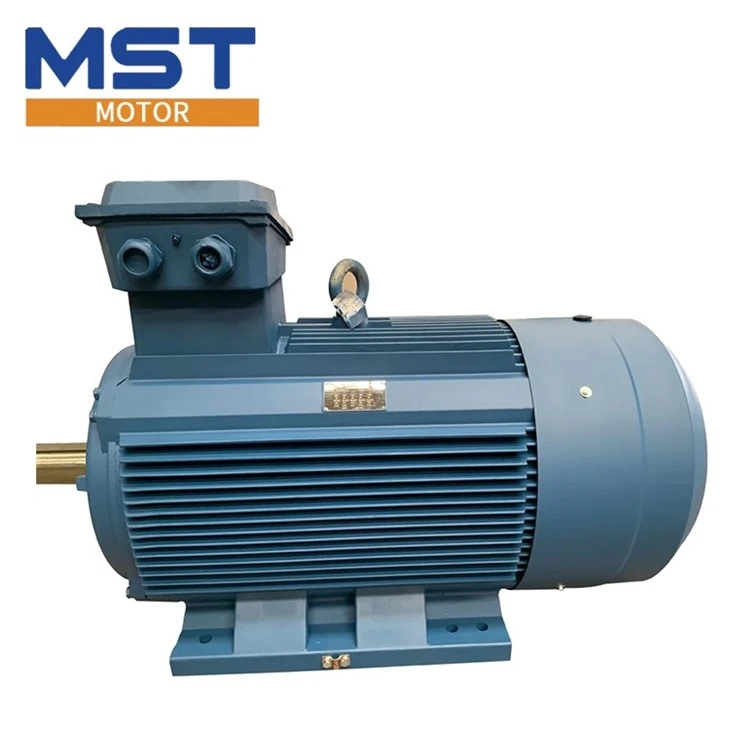
Our Cage AC Motor Products
We offer a wide range of cage AC motors that are designed to meet the diverse needs of our customers. Our High Efficiency Induction Motor is designed to operate efficiently even in environments with moderate harmonic distortion. It features advanced insulation materials and optimized magnetic circuit design to reduce the effects of harmonics on motor performance.
Our High Efficiency 3 Phase AC Motor is suitable for a variety of industrial applications. It is built with high - quality components that can withstand the mechanical stress caused by torque pulsations due to harmonics.
For applications where low - voltage operation is required, we offer the Low Voltage Induction Motor. This motor is designed to operate reliably in low - voltage electrical systems, even in the presence of harmonic distortion.
Conclusion
Harmonic distortion can have a significant impact on the performance and lifespan of cage AC motors. As a cage AC motor supplier, we are committed to providing our customers with high - quality motors that can withstand the challenges posed by harmonic distortion. Our products are designed with advanced technologies and materials to minimize the effects of harmonics on motor operation.
If you are facing issues with harmonic distortion in your electrical system or are looking for a reliable cage AC motor supplier, we invite you to contact us for a detailed discussion. Our team of experts can provide you with customized solutions based on your specific requirements.
References
- Fitzgerald, A. E., Kingsley, C., & Umans, S. D. (2003). Electric Machinery. McGraw - Hill.
- Chapman, S. J. (2012). Electric Machinery Fundamentals. McGraw - Hill.
- IEEE Recommended Practice for Monitoring Electric Power Quality (IEEE Std 1159 - 2019).