




As a seasoned supplier of flameproof motors, I've witnessed firsthand the critical role these motors play in various industries. Flameproof motors are designed to contain an internal explosion without allowing it to spread to the surrounding environment, making them essential in hazardous areas where flammable gases, vapors, or dusts are present. In this blog, I'll delve into the control methods for flameproof motors, providing insights that can help you make informed decisions for your operations.
Understanding Flameproof Motors
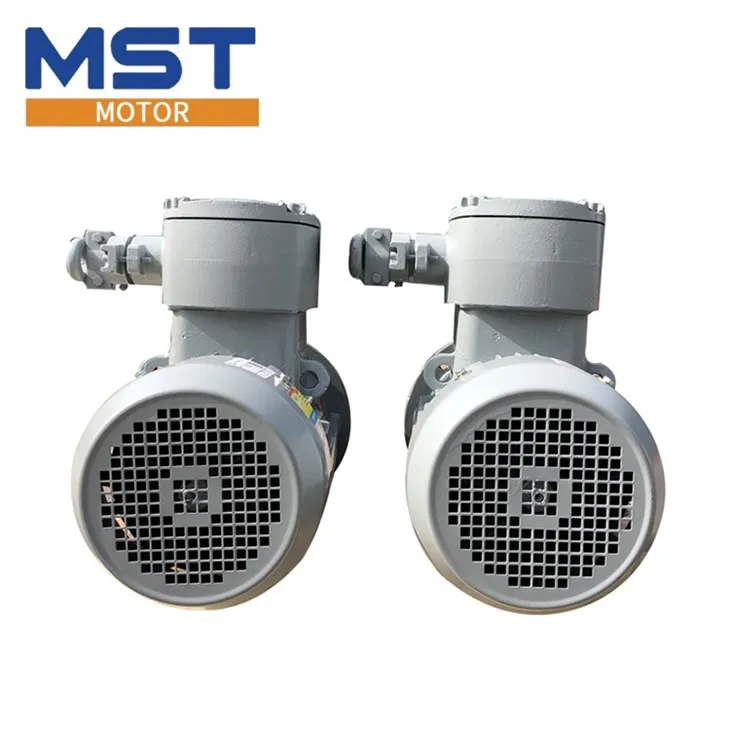
Before we explore the control methods, let's briefly understand what flameproof motors are. A Flameproof Motor is constructed in such a way that it can withstand an internal explosion of a specified gas or vapor mixture without suffering damage and without allowing the explosion to propagate through its joints or openings to the surrounding atmosphere. These motors are typically used in industries such as oil and gas, mining, chemical processing, and pharmaceuticals.
Control Methods for Flameproof Motors
1. Starter Control
Starter control is one of the most fundamental methods for operating flameproof motors. Starters are used to start, stop, and protect the motor from overloads and short circuits. There are several types of starters available for flameproof motors, including direct-on-line (DOL) starters, star-delta starters, and soft starters.
- Direct-On-Line (DOL) Starters: DOL starters are the simplest and most commonly used type of starter for small to medium-sized flameproof motors. They connect the motor directly to the power supply, providing full voltage to the motor terminals at startup. While DOL starters are cost-effective and easy to install, they can cause high inrush currents, which may lead to voltage dips in the electrical system.
- Star-Delta Starters: Star-delta starters are used for larger flameproof motors to reduce the inrush current during startup. They work by initially connecting the motor windings in a star configuration, which reduces the voltage applied to the motor and limits the inrush current. Once the motor has reached a certain speed, the windings are reconnected in a delta configuration, providing full voltage to the motor. Star-delta starters are more complex and expensive than DOL starters but offer significant energy savings and reduced stress on the motor.
- Soft Starters: Soft starters are electronic devices that gradually increase the voltage applied to the motor during startup, reducing the inrush current and torque. They provide a smooth acceleration and deceleration of the motor, which helps to extend the motor's lifespan and reduce mechanical stress on the connected equipment. Soft starters are more expensive than DOL and star-delta starters but offer precise control and energy savings.
2. Speed Control
In many applications, it is necessary to control the speed of the flameproof motor to meet the specific requirements of the process. There are several methods available for speed control of flameproof motors, including variable frequency drives (VFDs), pole changing motors, and hydraulic couplings.
- Variable Frequency Drives (VFDs): VFDs are the most common method for speed control of flameproof motors. They work by varying the frequency and voltage of the electrical supply to the motor, which allows for precise control of the motor speed. VFDs offer several advantages, including energy savings, improved process control, and reduced mechanical stress on the motor and connected equipment. However, they are more expensive than other speed control methods and require proper installation and maintenance.
- Pole Changing Motors: Pole changing motors are designed with multiple sets of stator windings that can be connected in different configurations to change the number of poles in the motor. By changing the number of poles, the motor speed can be changed in discrete steps. Pole changing motors are simple and reliable but offer limited speed control options compared to VFDs.
- Hydraulic Couplings: Hydraulic couplings are mechanical devices that use a fluid to transmit torque between the motor and the driven equipment. They work by adjusting the amount of fluid in the coupling, which changes the slip between the motor and the driven equipment and allows for speed control. Hydraulic couplings are suitable for applications where a smooth and gradual speed change is required, but they are less efficient than VFDs and require regular maintenance.
3. Protection Control
Protection control is essential for ensuring the safe and reliable operation of flameproof motors. Flameproof motors are typically equipped with various protection devices to prevent damage from overloads, short circuits, overheating, and other electrical faults.
- Overload Protection: Overload protection devices are used to protect the motor from damage caused by excessive current. They work by monitoring the motor current and tripping the circuit breaker or contactor if the current exceeds a predetermined level. Overload protection devices can be thermal, magnetic, or electronic, depending on the application requirements.
- Short Circuit Protection: Short circuit protection devices are used to protect the motor and the electrical system from damage caused by short circuits. They work by detecting the high current flow caused by a short circuit and quickly interrupting the circuit to prevent further damage. Short circuit protection devices can be fuses, circuit breakers, or combination starters.
- Overheating Protection: Overheating protection devices are used to protect the motor from damage caused by excessive temperature. They work by monitoring the motor temperature and tripping the circuit breaker or contactor if the temperature exceeds a predetermined level. Overheating protection devices can be thermal sensors, thermostats, or motor protection relays.
- Earth Fault Protection: Earth fault protection devices are used to protect the motor and the electrical system from damage caused by earth faults. They work by detecting the current flow to earth and quickly interrupting the circuit to prevent further damage. Earth fault protection devices can be residual current devices (RCDs), earth leakage circuit breakers (ELCBs), or motor protection relays.
4. Remote Control
In many industrial applications, it is necessary to control the flameproof motor remotely to improve safety and efficiency. Remote control systems allow operators to start, stop, and monitor the motor from a central location, without the need for direct access to the motor.

- Wired Remote Control Systems: Wired remote control systems use cables to transmit signals between the control panel and the motor. They are reliable and secure but require extensive wiring and installation, which can be costly and time-consuming.
- Wireless Remote Control Systems: Wireless remote control systems use radio waves or infrared signals to transmit signals between the control panel and the motor. They offer greater flexibility and mobility than wired remote control systems but may be affected by interference and require proper installation and configuration.
Conclusion
In conclusion, the control methods for flameproof motors are essential for ensuring the safe, reliable, and efficient operation of these motors in hazardous areas. By understanding the different control methods available and selecting the appropriate method for your application, you can optimize the performance of your flameproof motor and reduce the risk of downtime and equipment damage.
If you're in the market for a Flameproof Motor, Ex Proof AC Motor, or Proof Motor, I encourage you to contact us to discuss your specific requirements. Our team of experts can provide you with the guidance and support you need to select the right motor and control system for your application.
References
- Electrical Installation Guide for Hazardous Areas, International Electrotechnical Commission (IEC).
- Explosion Protection Handbook, Siemens AG.
- Motor and Drive Handbook, ABB Ltd.