


In the realm of industrial machinery, the efficiency of speed control in motors is a topic of paramount importance. As a supplier of multi - speed motors, I've witnessed firsthand the transformative impact these motors can have on various industries. In this blog, we'll delve into the speed - control efficiency of multi - speed motors, exploring their mechanisms, advantages, and real - world applications.
Understanding Multi - Speed Motors
Multi - speed motors are designed to operate at different speeds, providing flexibility in a wide range of applications. Unlike single - speed motors that run at a fixed speed, multi - speed motors can adjust their rotational speed according to the requirements of the task at hand. This adaptability is achieved through various methods, such as changing the number of poles in the motor's stator winding or using external control devices.
One of the key factors contributing to the efficiency of multi - speed motors is their ability to match the motor's speed to the load. When a motor operates at a speed that is closely aligned with the load requirements, it consumes less energy. For example, in a conveyor belt system, the motor can run at a lower speed when the belt is carrying a light load and increase the speed when a heavier load is detected. This not only saves energy but also reduces wear and tear on the motor and other components of the system.
Mechanisms of Speed Control
There are several ways to achieve speed control in multi - speed motors. One common method is the pole - changing technique. By altering the number of poles in the stator winding, the synchronous speed of the motor can be changed. The synchronous speed (n_s) of an AC motor is given by the formula (n_s=\frac{120f}{p}), where (f) is the frequency of the power supply and (p) is the number of poles. For instance, a motor with 4 poles operating on a 50 - Hz power supply has a synchronous speed of (n_s=\frac{120\times50}{4}=1500) RPM. If the number of poles is changed to 6, the synchronous speed drops to (n_s=\frac{120\times50}{6}=1000) RPM.
Another approach is the use of variable frequency drives (VFDs). VFDs control the speed of the motor by varying the frequency and voltage supplied to the motor. By adjusting the frequency, the synchronous speed of the motor can be changed continuously over a wide range. This method offers precise speed control and high efficiency, especially in applications where a smooth and accurate speed adjustment is required. For example, in a machine tool, a VFD - controlled multi - speed motor can provide the exact speed needed for different machining operations, such as drilling, milling, and turning.
Advantages of Multi - Speed Motors in Terms of Speed - Control Efficiency
Energy Savings
One of the most significant advantages of multi - speed motors is their potential for energy savings. As mentioned earlier, by matching the motor's speed to the load, the motor can operate more efficiently. In many industrial processes, a significant portion of the energy consumption is attributable to motors. By using multi - speed motors with efficient speed - control mechanisms, companies can reduce their energy bills substantially. For example, in a pumping system, a multi - speed motor can be adjusted to pump only the required amount of fluid, avoiding the energy waste associated with running a single - speed motor at full capacity all the time.
Improved Process Control
Multi - speed motors also offer better process control. In applications such as food processing, textile manufacturing, and chemical production, precise speed control is essential for maintaining product quality. A multi - speed motor can be adjusted to provide the optimal speed for each stage of the process, ensuring consistent and high - quality output. For instance, in a textile spinning machine, a multi - speed motor can control the speed of the spinning process, resulting in a more uniform yarn quality.
Extended Equipment Lifespan
By reducing the stress on the motor and other components, multi - speed motors can extend the lifespan of the equipment. When a motor operates at a lower speed, it generates less heat and mechanical stress, which reduces the likelihood of component failure. This means less downtime for maintenance and replacement, resulting in increased productivity and cost savings for the company.
Real - World Applications
Multi - speed motors find applications in a wide range of industries. In the Variable Frequency Three Phase Motors in Cement Plant, multi - speed motors are used in conveyor belts, crushers, and fans. These motors can adjust their speed according to the production requirements, ensuring efficient operation of the plant. For example, a conveyor belt motor can run at a lower speed when there is less material to transport and increase the speed during peak production hours.
In the HVAC (Heating, Ventilation, and Air Conditioning) industry, multi - speed motors are used in fans and pumps. By adjusting the speed of the fans and pumps, the HVAC system can maintain the desired temperature and air quality while consuming less energy. For instance, in a large commercial building, a multi - speed fan motor can be adjusted to provide the right amount of ventilation based on the number of occupants in the building.
Our Offerings as a Multi - Speed Motor Supplier
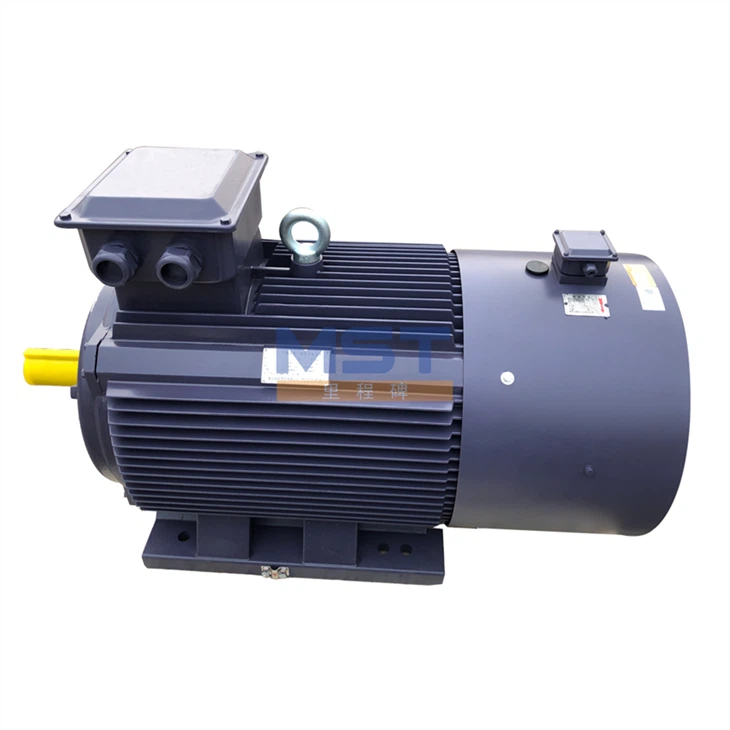
As a supplier of Multi Speed Motor, we offer a wide range of products with different speed - control options. Our motors are designed with the latest technology to ensure high efficiency, reliability, and performance. We provide both pole - changing and VFD - controlled multi - speed motors, catering to the diverse needs of our customers.
Our variable frequency multi - speed motors, also known as Variable Frequency Electric Motor, are particularly popular for their precise speed control and energy - saving capabilities. These motors can be customized to meet the specific requirements of different applications, whether it's a small - scale workshop or a large industrial plant.
Conclusion
The speed - control efficiency of multi - speed motors is a crucial factor in modern industrial applications. With their ability to match the motor's speed to the load, multi - speed motors offer significant energy savings, improved process control, and extended equipment lifespan. As a multi - speed motor supplier, we are committed to providing our customers with high - quality products that can help them achieve their efficiency and productivity goals.
If you're interested in learning more about our multi - speed motors or have specific requirements for your application, we encourage you to contact us for a detailed discussion. Our team of experts is ready to assist you in selecting the right motor and speed - control solution for your needs.

References
- Chapman, S. J. (2012). Electric Machinery Fundamentals. McGraw - Hill Education.
- Fitzgerald, A. E., Kingsley, C., & Umans, S. D. (2003). Electric Machinery. McGraw - Hill.
- Krause, P. C., Wasynczuk, O., & Sudhoff, S. D. (2002). Analysis of Electric Machinery and Drive Systems. Wiley - Interscience.