


As a supplier of exp motors, I've witnessed firsthand the numerous advantages these motors bring to various industrial applications. However, like any technology, exp motors are not without their drawbacks. In this blog, I'll delve into the disadvantages of exp motors, offering a balanced perspective for potential buyers and industry professionals.
High Initial Cost
One of the most significant disadvantages of exp motors is their high initial cost. These motors are designed to operate in hazardous environments where there is a risk of explosion, such as oil refineries, chemical plants, and mines. To meet the strict safety standards and regulations, exp motors are built with specialized materials and construction techniques.
For example, they often feature robust enclosures that are designed to contain any internal explosion and prevent it from spreading to the surrounding environment. These enclosures are typically made of heavy - duty materials like cast iron or stainless steel, which are more expensive than the materials used in standard motors. Additionally, the manufacturing process for exp motors is more complex, involving extra testing and certification procedures. This all contributes to a higher price tag compared to non - exp motors.
A standard industrial motor might cost a few hundred dollars, while an exp motor with similar power ratings can cost several thousand dollars. This high initial investment can be a major deterrent for small and medium - sized enterprises, especially those on a tight budget.
Limited Availability of Spare Parts
Another drawback is the limited availability of spare parts for exp motors. Since these motors are designed for specific hazardous environments, the demand for them is relatively niche compared to standard motors. As a result, there are fewer manufacturers producing spare parts for exp motors, and the supply chain can be more fragile.
When a component of an exp motor fails, it can be challenging to find a replacement part quickly. This can lead to significant downtime for industrial operations, which can be extremely costly. For instance, in a chemical plant, if an exp motor in a critical process fails and the spare part is not readily available, the entire production line may have to be shut down until the part is sourced and replaced.
The limited availability of spare parts also means that they can be more expensive. Manufacturers may charge a premium for these specialized components due to the lower volume of production and the higher cost of materials and manufacturing.
Higher Maintenance Requirements
Exp motors generally have higher maintenance requirements compared to standard motors. The harsh operating conditions in hazardous environments can take a toll on the motor's components. For example, in a dusty or corrosive environment, the motor's enclosure and internal components can be damaged over time.
Regular inspections are essential to ensure that the motor's explosion - proof features are intact. This includes checking the integrity of the enclosure, the tightness of the seals, and the condition of the electrical connections. Any signs of wear or damage need to be addressed immediately to prevent potential safety hazards.

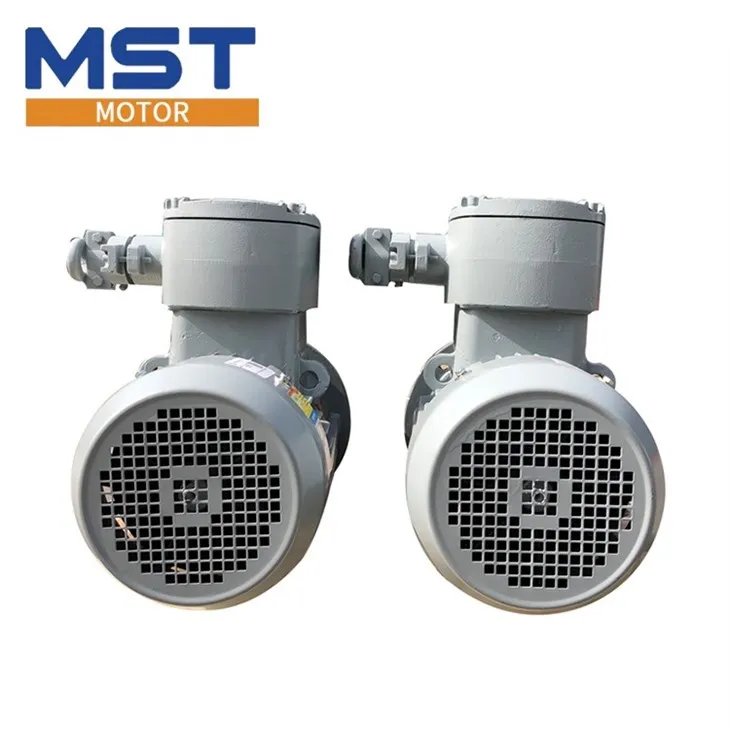
In addition to inspections, lubrication and cleaning of the motor's components are also more critical. The lubricants used in exp motors need to be compatible with the hazardous environment and the motor's design. Incorrect lubrication can lead to increased friction, overheating, and ultimately, motor failure. Cleaning the motor to remove dust, dirt, and corrosive substances is also necessary to maintain its performance and safety.
Lower Efficiency
Exp motors typically have lower efficiency compared to standard motors. The design features that make them explosion - proof, such as the heavy - duty enclosures and additional safety mechanisms, can add extra weight and resistance to the motor. This means that more energy is required to operate the motor, resulting in higher energy consumption.
For example, the thick enclosure of an exp motor can act as an insulator, trapping heat and reducing the motor's ability to dissipate it efficiently. This can lead to overheating, which in turn can cause the motor to draw more power to maintain its performance.
In industries where energy costs are a significant part of the operating budget, the lower efficiency of exp motors can have a substantial financial impact over time. Companies may find themselves spending more on electricity bills to run their exp motors compared to using standard motors in non - hazardous areas.
Complex Installation
Installing an exp motor is a more complex process compared to a standard motor. Due to the strict safety requirements, specialized installation procedures need to be followed. The installation site needs to be carefully prepared to ensure that it meets the explosion - proof standards.
For example, the electrical connections need to be made in a way that prevents the formation of sparks or arcs that could potentially ignite the hazardous atmosphere. This may involve using special cable glands and conduit systems that are designed to contain any potential electrical faults.
The installation also requires trained and certified technicians. These technicians need to have a thorough understanding of the exp motor's design, the explosion - proof standards, and the specific requirements of the hazardous environment. Hiring such technicians can add to the overall cost of the motor installation.
Compatibility Issues
Exp motors may face compatibility issues with existing equipment and systems. In some cases, the physical dimensions and mounting requirements of exp motors may be different from standard motors. This can make it difficult to replace an existing standard motor with an exp motor without significant modifications to the equipment.
Moreover, the electrical characteristics of exp motors, such as voltage, current, and frequency, need to be carefully matched with the power supply and the connected load. Any mismatch can lead to poor performance, overheating, or even damage to the motor and the connected equipment.
Limited Performance Range
Exp motors are often designed for specific hazardous environments and applications. This means that their performance range may be more limited compared to standard motors. For example, they may have a narrower speed range or lower power ratings.
In some industrial processes, there may be a need for motors with variable speeds or high - power outputs. Exp motors may not be able to meet these requirements as effectively as standard motors. This can limit the flexibility of industrial operations and may require companies to use multiple motors or alternative solutions to achieve the desired performance.
Regulatory and Certification Challenges
Exp motors are subject to strict regulatory and certification requirements. These requirements vary from country to country and from industry to industry. Meeting these regulations can be a time - consuming and costly process for manufacturers.
For suppliers like me, it means that we need to ensure that our exp motors comply with all the relevant standards before they can be sold. This involves extensive testing and documentation, which can delay the product launch and increase the overall cost of production.
For end - users, it means that they need to be aware of the regulatory requirements in their specific location and industry. Failing to comply with these regulations can result in significant fines and safety risks.
Despite these disadvantages, exp motors are still an essential component in many industries where safety is of utmost importance. At [Supplier's Position], we understand the challenges that come with using exp motors, and we are committed to providing our customers with high - quality products and comprehensive support.
If you are considering purchasing exp motors, we encourage you to [Contact Method]. Our team of experts can help you understand the trade - offs and make an informed decision. We can also assist you with installation, maintenance, and sourcing of spare parts. Visit our website for more information on Flameproof Motor, Flame Proof Motor, and Explosion Proof Electric Motor.
References
- IEEE Standard for Explosion - Proof and Dust - Ignition - Proof Electrical Equipment for Hazardous (Classified) Locations.
- International Electrotechnical Commission (IEC) standards for explosive atmospheres.
- National Fire Protection Association (NFPA) codes related to electrical equipment in hazardous areas.