


Hey there! As a supplier of cage rotor motors, I often get asked about the temperature rise limits for these motors. So, I thought I'd write this blog to shed some light on this important topic.
First off, let's understand what temperature rise means in the context of a cage rotor motor. Temperature rise is the increase in temperature of the motor above the ambient temperature during normal operation. It's a crucial factor because excessive temperature rise can lead to all sorts of problems, like reduced motor life, insulation degradation, and even motor failure.
The temperature rise limits for a cage rotor motor are mainly determined by the insulation class of the motor. Different insulation classes can withstand different levels of heat. Here are the common insulation classes and their corresponding maximum allowable temperature rises:
Insulation Class A
Insulation class A can handle a relatively lower temperature. The maximum allowable temperature rise for class A insulation in a cage rotor motor is typically around 60°C when measured by a resistance method or 55°C when measured by a thermometer. This class is often used in older motors or in applications where the operating environment is relatively cool.
Insulation Class E
Class E insulation is a step up from class A. It can tolerate a higher temperature rise. The maximum allowable temperature rise for class E insulation is about 75°C (resistance method) or 70°C (thermometer method). Motors with class E insulation are more commonly used in a variety of industrial applications.
Insulation Class B
Class B is quite popular in many industrial settings. The maximum temperature rise for class B insulation is approximately 80°C (resistance method) or 75°C (thermometer method). Motors with this insulation class can handle more heat, making them suitable for applications with moderate to high loads.
Insulation Class F
Class F insulation is known for its higher heat resistance. The maximum allowable temperature rise for class F insulation is around 105°C (resistance method) or 100°C (thermometer method). This class is often used in motors that operate under heavy loads or in environments with high ambient temperatures.

Insulation Class H
Finally, insulation class H is the most heat - resistant among the common insulation classes. The maximum temperature rise for class H insulation is about 125°C (resistance method) or 120°C (thermometer method). Motors with class H insulation are used in extreme conditions, such as in some high - power industrial machinery or in areas with very high ambient temperatures.
Now, why are these temperature rise limits so important? Well, if a motor operates above its temperature rise limit, the insulation starts to degrade at a much faster rate. This can lead to short - circuits, which ultimately result in motor failure. Also, excessive heat can cause mechanical components in the motor to expand and wear out more quickly, reducing the overall efficiency and lifespan of the motor.
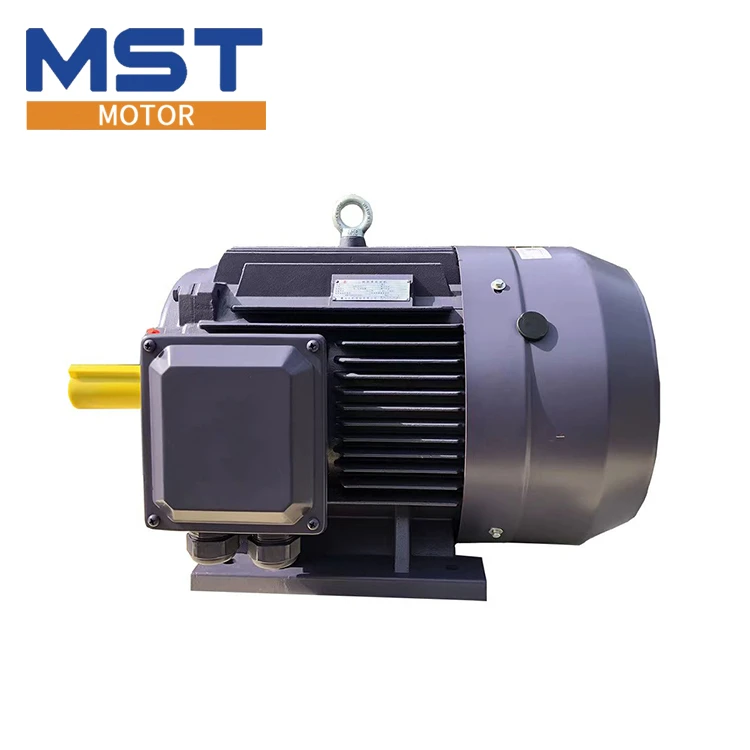
As a cage rotor motor supplier, we always make sure to provide motors with the appropriate insulation class for the intended application. We have a wide range of motors, including High Efficiency Motor Ie2 and High Efficiency Ac Motor. These motors are designed to meet the highest standards of efficiency and performance while keeping the temperature rise within the safe limits.
Our Cage Rotor Motor is engineered with advanced technology to ensure that it operates as efficiently as possible. We use high - quality insulation materials to guarantee that the motor can withstand the expected temperature rise without any issues.
In addition to the insulation class, there are other factors that can affect the temperature rise of a cage rotor motor. The load on the motor is a major one. If a motor is constantly running at or near its maximum load capacity, it will generate more heat and have a higher temperature rise. The ventilation and cooling system of the motor also play a crucial role. A well - designed ventilation system can help dissipate heat more effectively, keeping the temperature rise under control.
The ambient temperature of the operating environment is another important factor. If the motor is installed in a hot room or an area with poor air circulation, the temperature rise will be higher compared to a cooler and well - ventilated environment. That's why it's essential to consider the ambient conditions when selecting a cage rotor motor.
We also take into account these external factors when recommending a motor to our customers. We'll ask about the load requirements, the operating environment (including ambient temperature and ventilation), and any other specific needs. Based on this information, we can help our customers choose the right motor with the appropriate insulation class and cooling system to ensure optimal performance and a long lifespan.
If you're in the market for a cage rotor motor, it's crucial to understand the temperature rise limits and how they relate to your application. Don't just go for the cheapest option; make sure you're getting a motor that can handle the heat. A motor that operates within its temperature rise limits will save you money in the long run by reducing the risk of breakdowns and the need for frequent replacements.
If you have any questions about cage rotor motors, their temperature rise limits, or if you're interested in our products, feel free to reach out to us. We're here to help you find the perfect motor for your needs. Whether you need a motor for a small - scale application or a large industrial project, we've got you covered.
In conclusion, understanding the temperature rise limits for a cage rotor motor is essential for ensuring its proper operation and longevity. We, as a supplier, are committed to providing high - quality motors that meet the highest standards of performance and safety. So, if you're thinking about purchasing a cage rotor motor, give us a chance to assist you.
References:
- IEEE Standard 112 - Test Procedures for Polyphase Induction Motors and Generators
- NEMA Standards Publication MG 1 - Motors and Generators